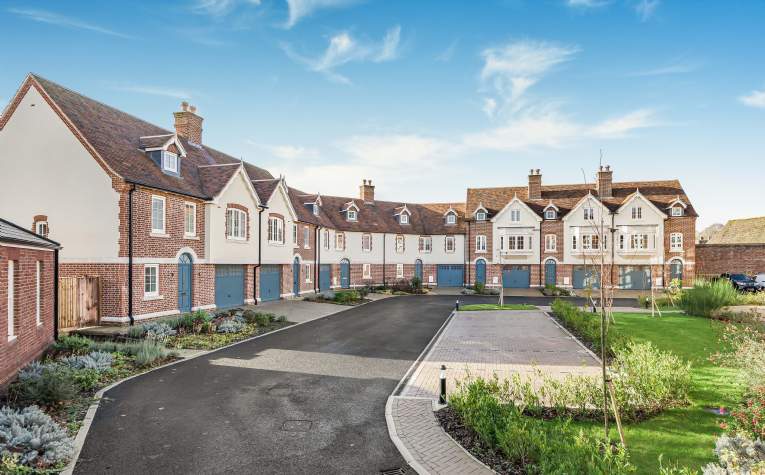
Originating in the eighteenth century, mews were designed to provide wealthy city-dwellers with housing for stables and carriages, alongside accommodation for coachmen and stable staff. Tucked away on quiet streets or courtyards behind grand townhouses, they encompassed rows of stables with living quarters above.
As cities expanded during the Victorian and Edwardian eras, they became an essential part of urban planning. The advent of the motor car meant that mews no longer served the same purpose, and many were converted.
Today, mews are much-coveted residential addresses, thanks to their distinctive blend of characterful architecture and close community feel. Such is their appeal that some developers are incorporating mews homes into new-build schemes, offering up all the charm and prestige of a converted mews property with the benefit of modern day design and construction.
Distinctive architecture is a key feature but perhaps the greatest pull of a mews home is in its setting. While often situated within vibrant areas, a mews tends to occupy a secluded spot, away from main roads or throughways, and has an intimate layout, offering privacy and encouraging a strong sense of community.